
How It Works
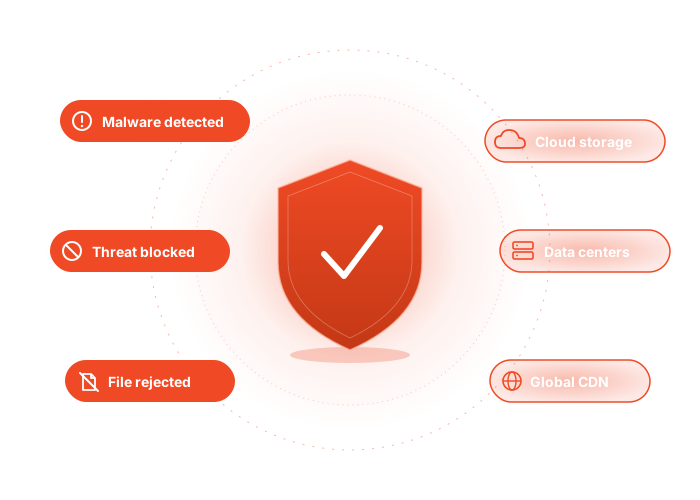
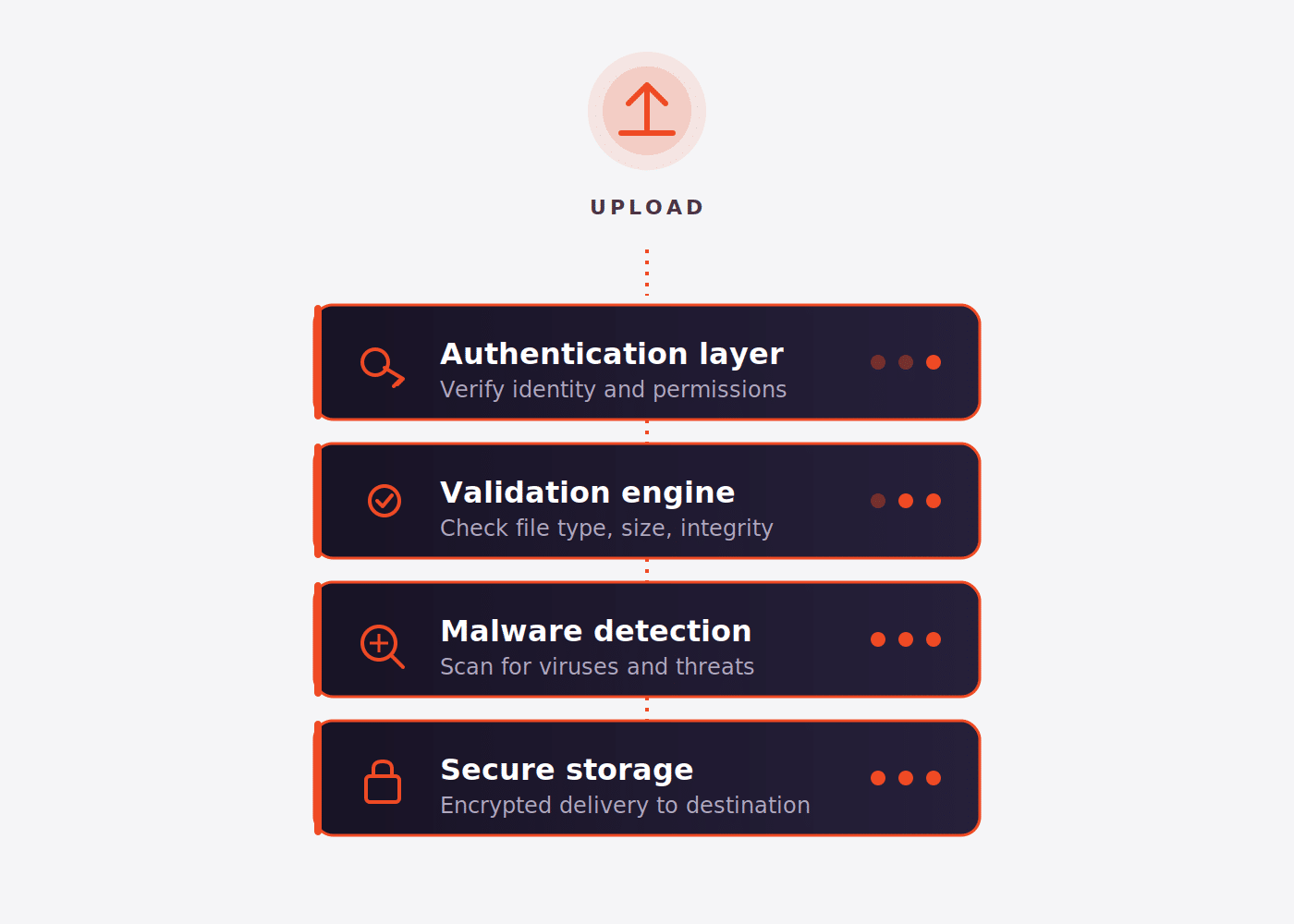
Complete upload security requires multiple layers of protection across the entire pipeline.
Upload Security Built for File Workflows
Encryption in Transit
Policy Signing
Access Control
Intelligent File Validation
Malware Detection
Activity Logging
Proper safeguards protect against these upload-layer threats:
Malware Distribution
Attackers upload files containing malicious software such as viruses, trojans, or spyware. When these files are downloaded or processed, they can infect user devices or internal systems.
Script Injection Attacks
Malicious scripts embedded in uploaded files can execute in browsers or applications, potentially enabling cross-site scripting (XSS), data theft, or unauthorized actions within the application.
Ransomware Payloads
Files may contain ransomware designed to encrypt systems or data once executed. If delivered through file uploads, ransomware can spread within infrastructure or to end users.
Infrastructure Compromise
Validated upload handling closes the backend vulnerabilities attackers target.
Unauthorized File Access
Weak access controls can allow attackers to upload, download, or access files without proper authorization, potentially exposing sensitive data or enabling abuse of the file system.
URL-Based Upload Abuse
If your system allows importing files via URL, attackers can trick your backend into fetching internal endpoints (SSRF), private cloud resources, and metadata services.
Upload security for every major platform




Secure Upload Infrastructure That Scales Globally
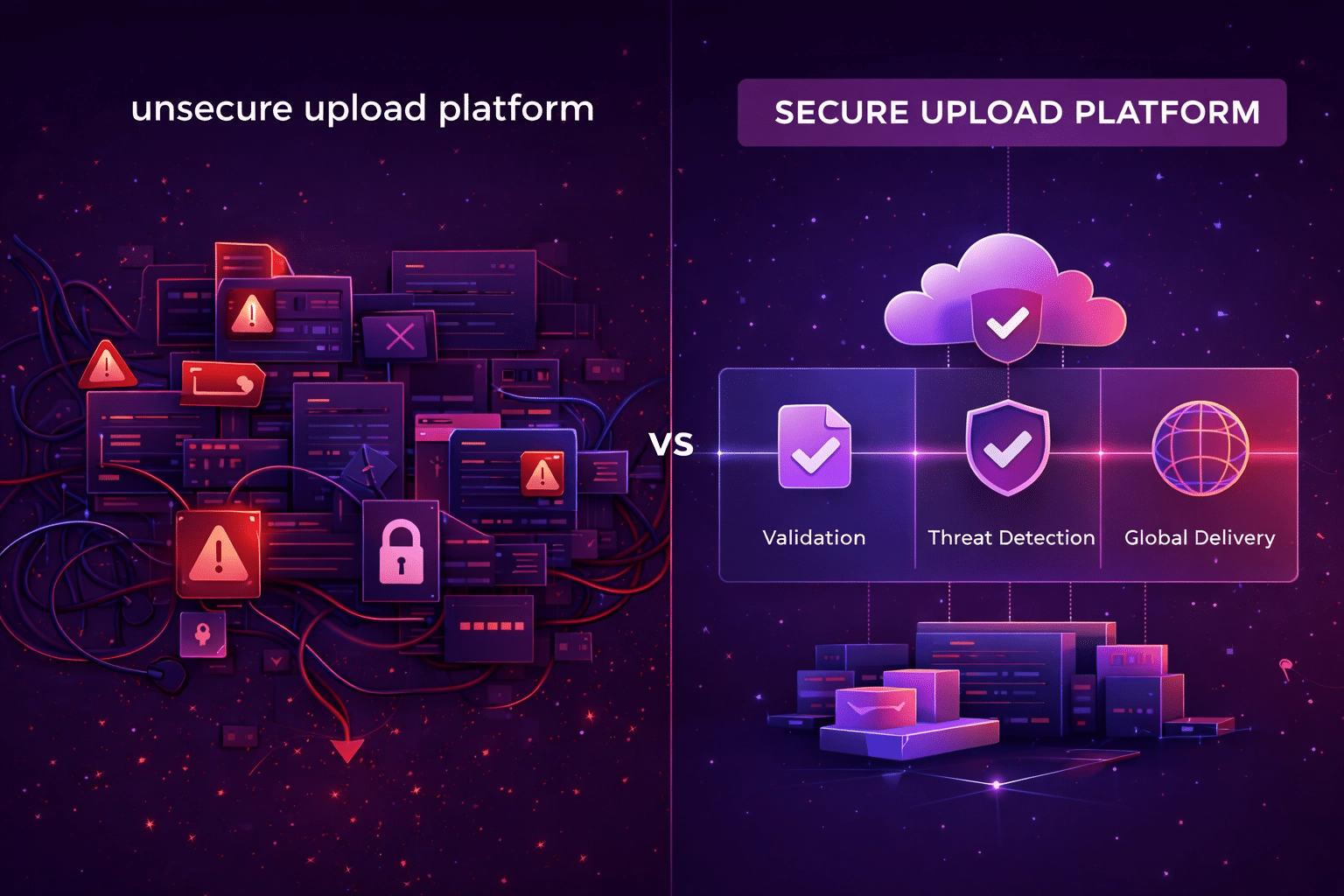
Multi-region Storage
Distributed infrastructure across global data centers.
High Availability
99.9% uptime.
CDN Accelerated
Lightning-fast delivery worldwide.
Scale Millions
Handle massive upload volumes securely.

“Filestack turned our document processing bottleneck into a seamless, secure, and scalable asset pipeline for millions of digital signatures.”
— Javier Hasbun, CEO, TuFirma.Digital
Built for Security-Conscious Organizations