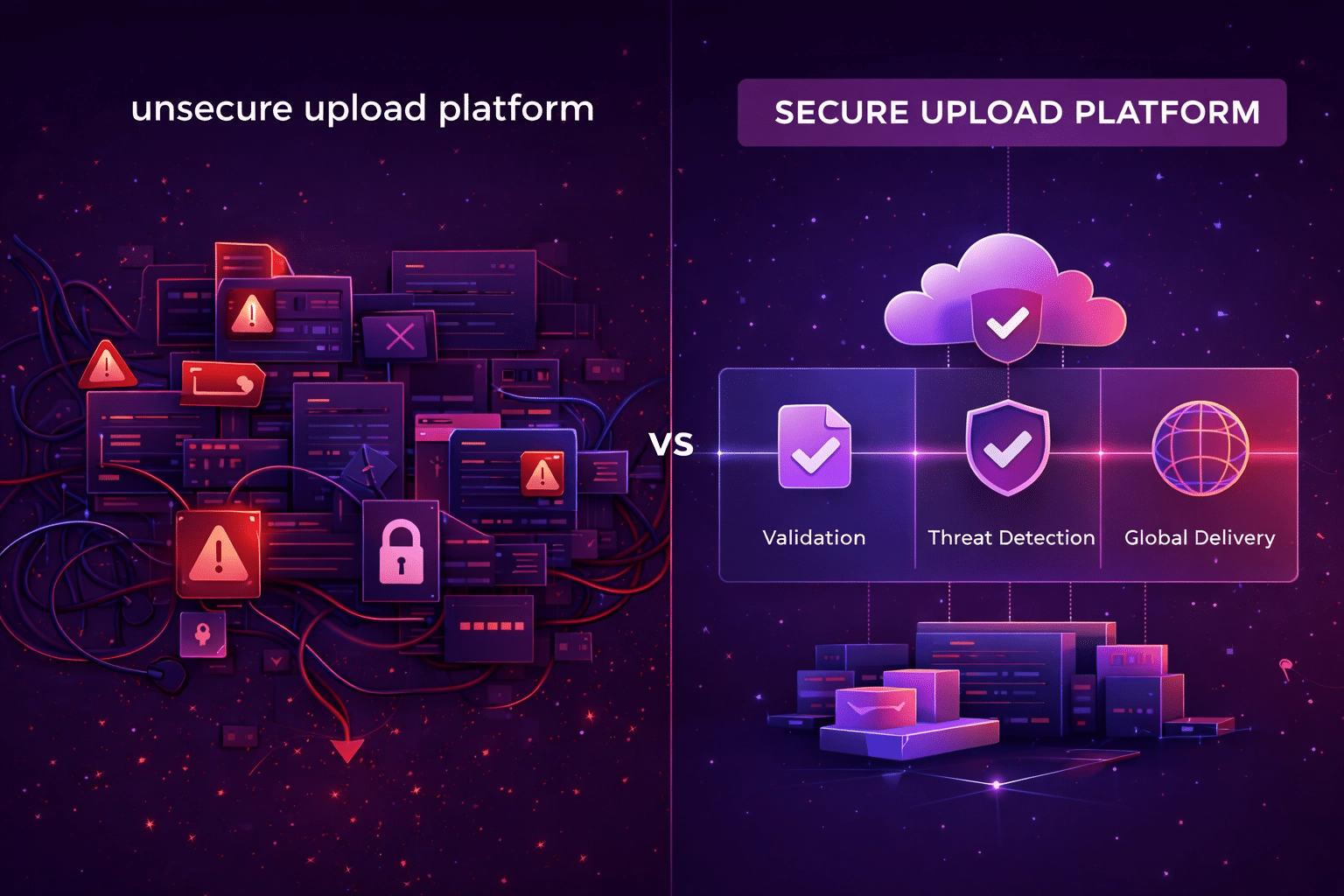
File Upload Security Built for Product


Filestack handles upload validation, malware detection, and secure delivery in one API. Enforce security policies and scale globally from day one.

Secure File Upload Infrastructure for Modern Applications

How It Works

Complete upload security requires multiple layers of protection across the entire pipeline.
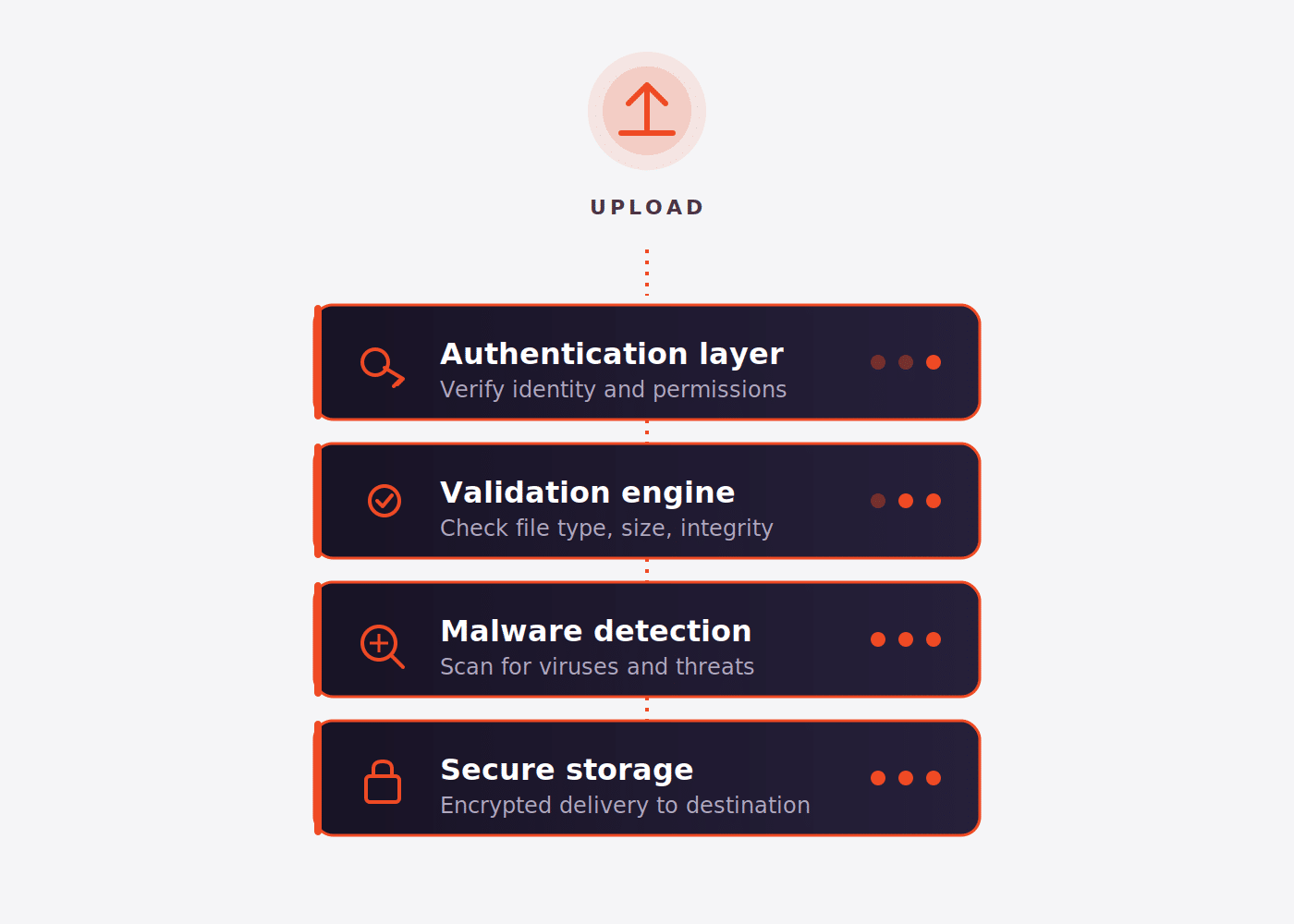
Protection Layers

Upload Security Built for File Workflows

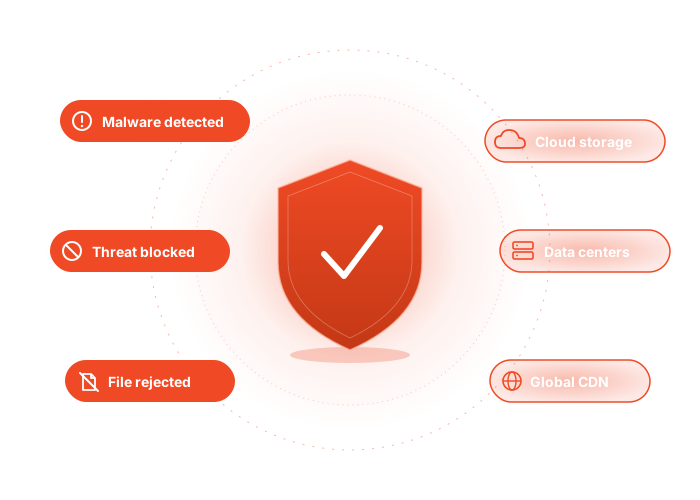
Filestack acts as a secure ingestion layer between users and your infrastructure, preventing untrusted files from directly interacting with your backend systems.

Encryption in Transit

Filestack uses TLS (Transport Layer Security) to encrypt data while it is moving between your application and the servers.

Policy Signing

Filestack use Base64URL-encoded JSON policies and HMAC-SHA256 signatures to authenticate requests.

Access Control

Enforce file access policies with tokenized URLs and permission controls.

Intelligent File Validation

Prevent disguised malicious files with MIME validation and file signature checks.

Malware Detection

Automatically scan files for viruses, ransomware, and malicious payloads.

Activity Logging

Track uploads, file access, and system activity for security monitoring.

Proper safeguards protect against these upload-layer threats:


Malware Distribution

Attackers upload files containing malicious software such as viruses, trojans, or spyware. When these files are downloaded or processed, they can infect user devices or internal systems.


Script Injection Attacks

Malicious scripts embedded in uploaded files can execute in browsers or applications, potentially enabling cross-site scripting (XSS), data theft, or unauthorized actions within the application.


Ransomware Payloads

Files may contain ransomware designed to encrypt systems or data once executed. If delivered through file uploads, ransomware can spread within infrastructure or to end users.


Infrastructure Compromise

Validated upload handling closes the backend vulnerabilities attackers target.


Unauthorized File Access

Weak access controls can allow attackers to upload, download, or access files without proper authorization, potentially exposing sensitive data or enabling abuse of the file system.


URL-Based Upload Abuse

If your system allows importing files via URL, attackers can trick your backend into fetching internal endpoints (SSRF), private cloud resources, and metadata services.

Upload security for every major platform

Engineering teams integrate secure uploads in minutes in their preferred programming language.
Javascript
Python
React
Ruby
PHP
Android

Block Malicious Files Before They Reach Your Application

Every upload is validated and scanned automatically. Your infrastructure stays protected at any volume.

Your Documents Stay Secure

Your users trust you with personal documents and private information. Filestack’s security ensures that your assets are only accessed by those with permission

Simple virus and malware detection for all file types

Filestack scans images and documents for viruses and malicious programs at upload time, across all supported file types.
Secure Upload

Guides to Secure File Upload Architecture

Secure vs. Regular Document Upload Apps

Microsoft’s 2024 data breach report shows that the average global cost of a data breach has reached USD 4.88 M. Regular document upload apps are at a high risk of cyber-attacks and data breaches. Therefore, using secure document upload apps is crucial for organizations. It helps them comply with regulations and prevent data breaches.

Implementing Secure File Delivery: A Comprehensive Developer’s Guide

As cyber threats are increasing exponentially, the need for secure file delivery is more pressing than ever. It helps protect sensitive data from unauthorized access, interception, and tampering. This builds trust with users and clients and prevents financial losses and operational disruptions.

Securing Web App File Delivery with Webpack and Filestack

File delivery is a fundamental aspect of every web app. It includes the delivery of static assets, such as HTML, JavaScript, CSS, and image files, necessary for rendering web pages. Content uploaded by users, such as images, videos, documents, etc., through a file uploader is also a part of the file delivery system. However, file transfer and delivery systems are at risk from various threats, such as unauthorized access, tampering, injection attacks, and data breaches.

Secure Upload Infrastructure That Scales Globally

Multi-region Storage

Distributed infrastructure across global data centers.

High Availability

99.9% uptime.

CDN Accelerated

Lightning-fast delivery worldwide.

Scale Millions

Handle massive upload volumes securely.

“Filestack turned our document processing bottleneck into a seamless, secure, and scalable asset pipeline for millions of digital signatures.”

— Javier Hasbun, CEO, TuFirma.Digital

Built for Security-Conscious Organizations